
Inhibited Knitting
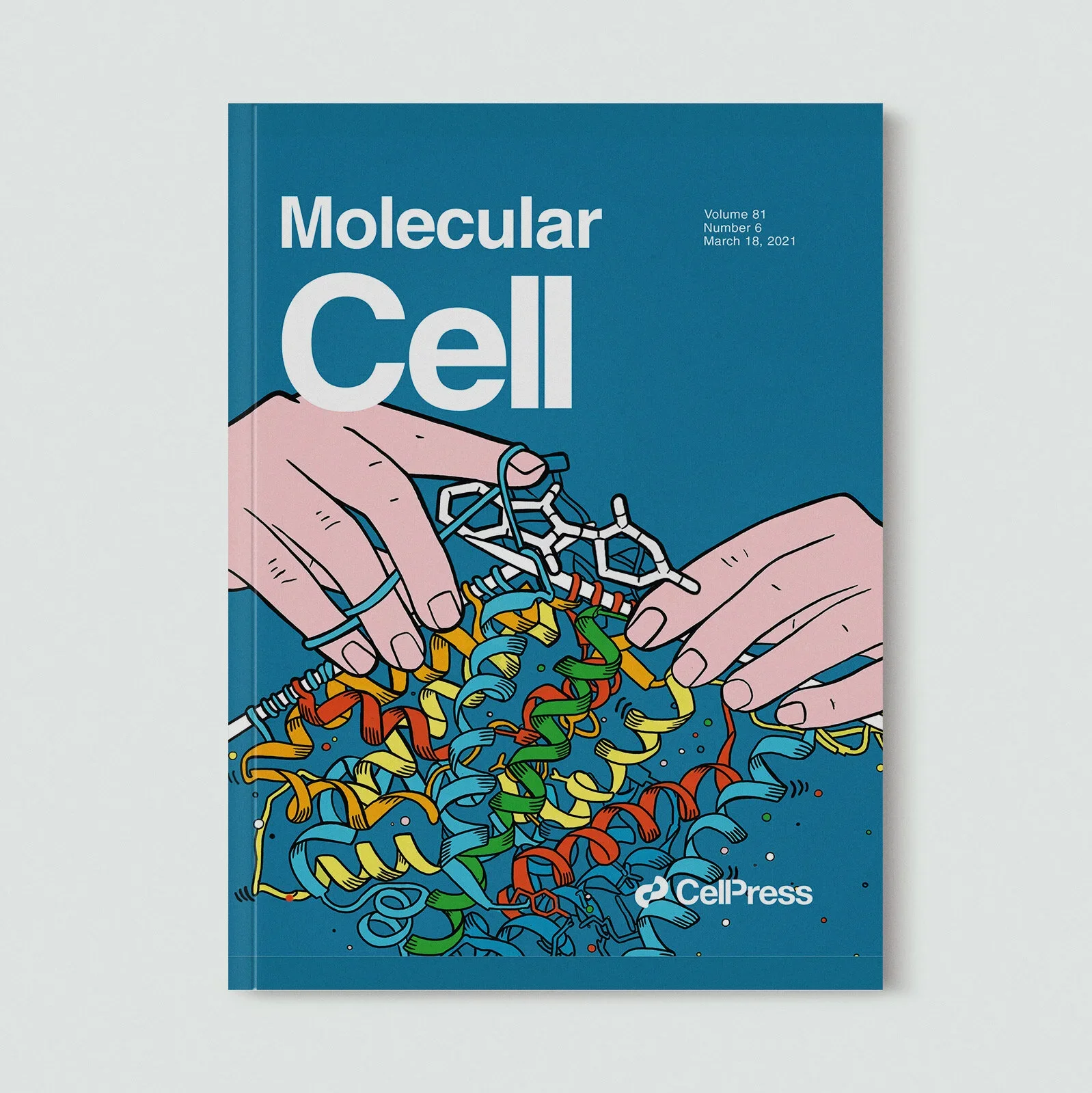
The IMiD target CRBN determines HSP90 activity toward transmembrane proteins essential in multiple myeloma.
Heider et al. investigate the molecular function of immunomodulatory drugs (IMiDs) and describe their target, CRBN, as a transmembrane protein (TP)-specific co-chaperone of the HSP90-AHA1 axis.[1] By disrupting CRBN-HSP90 interaction, IMiDs lead to destabilization of various TPs such as LAT1/CD98hc, which serve as therapeutic targets in multiple myeloma.
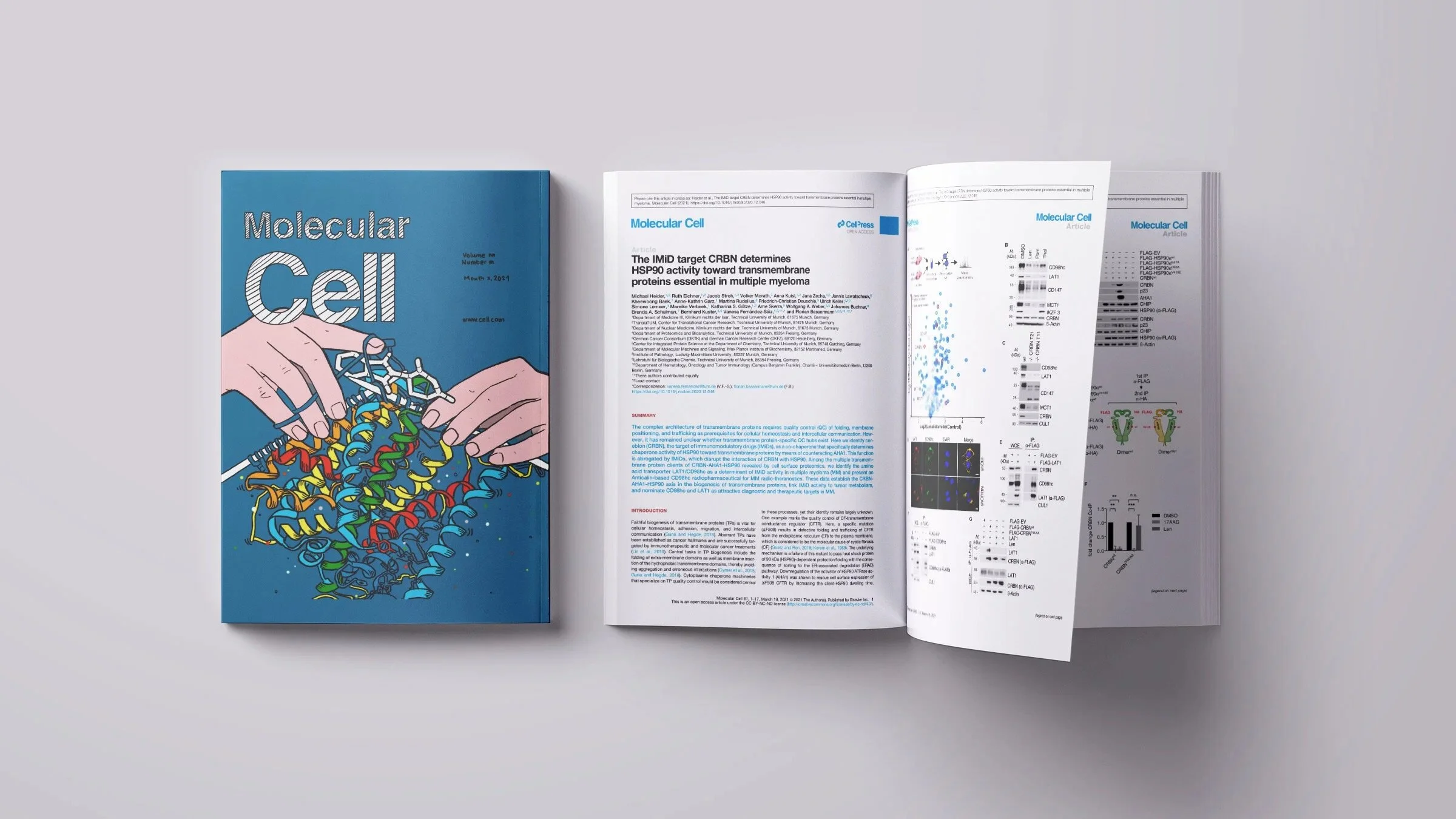
Cover Artwork preview
The illustration captures the dynamic complexity of a protein-knitting process, which underlies the anti-tumor activity of immunomodulatory drugs targeting cereblon by disrupting the interaction between CRBN and HSP90. The LAT1 structure is based on PDB entry 6IRS (without 4F2hc; DOI: 10.1038/s41586-019-1011-z).
The cover artwork adopts the bold and vibrant visual language of late-1950s pop art, deliberately juxtaposing the historical legacy of the thalidomide tragedy with the drug’s “second life” through a newly discovered mechanistic paradigm.
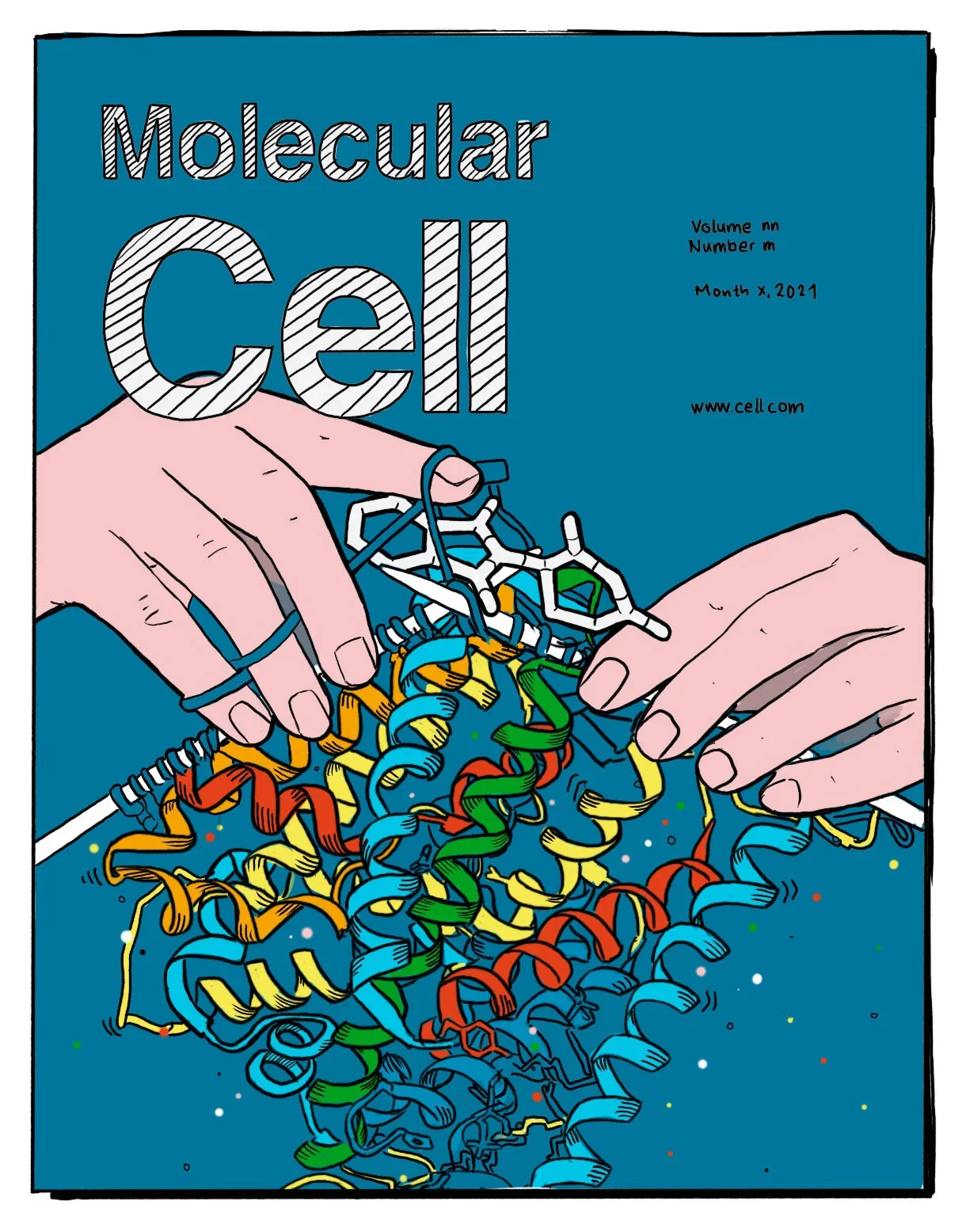
Draft version
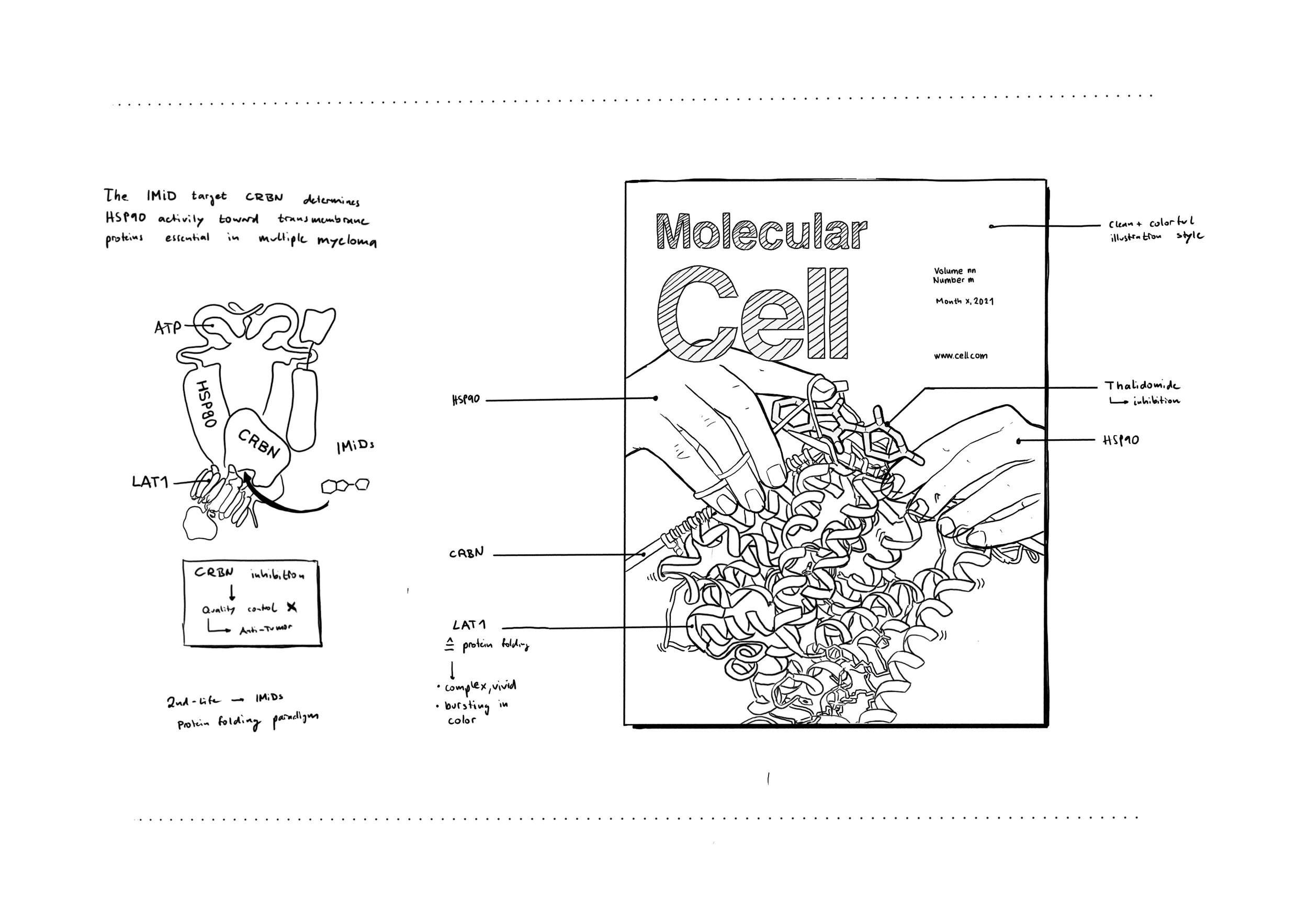
Concept sketch
[1] M. Heider, R. Eichner, J. Stroh, et al., Mol. Cell 2021, 81, 1170–1186.e10.
Research
Michael Heider, Vanesa Fernández-Sáiz, Prof. Florian Bassermann, Technical University of Munich
Featured in
Molecular Cell → Front Cover
Year
2021
Role
Scientific Illustration · Cover Artwork