
Circular Bioengineering – CoE
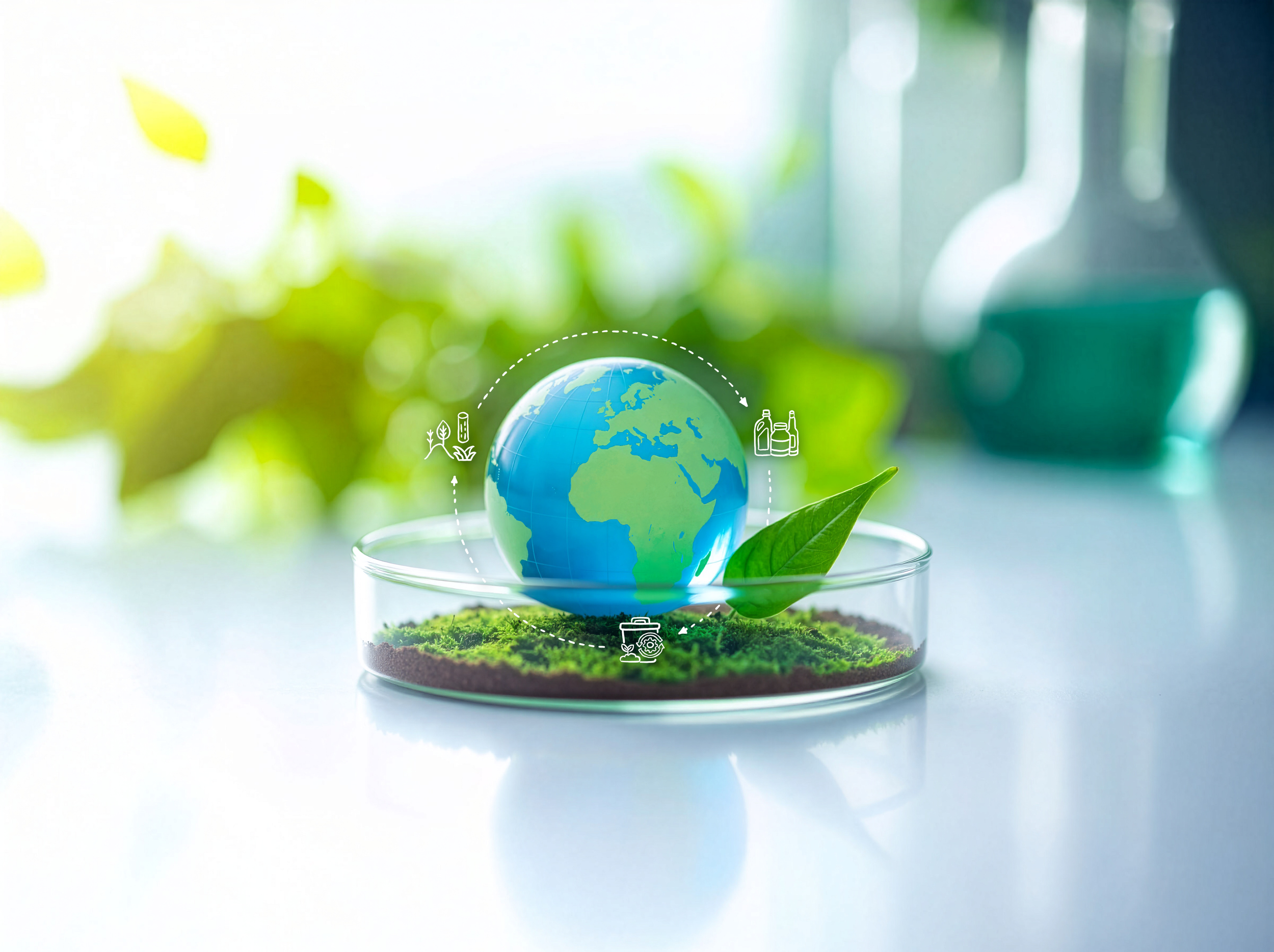
Circular Bioengineering – Key Visual for the BOKU Future Conference 2026
The advancement of modern society depends on access to a wide range of essential goods, from medicines and food to energy, textiles, and consumer products. Since the Industrial Revolution, technological innovations have enabled the large-scale manufacturing of these goods, fueling rapid population growth and improving quality of life. However, this progress has come with significant environmental costs. Most current manufacturing processes heavily depend on non-renewable fossil fuels and employ methods that can be toxic, polluting, and unsustainable. These processes generally follow a `take, use, and throw away` model, where resources are used once and then discarded. To address the urgent environmental challenges we face, there is a growing need to shift toward sustainable production practices. Bioengineering, a field that merges biology, engineering, and the physical sciences, plays a crucial role in this transformation by developing technologies that align with the principles of environmental sustainability. By harnessing biological systems, bioengineering enables the design and production of goods in ways that are cleaner, safer, and more compatible with natural ecosystems. Coupling these mild approaches with the efficient use of renewable resources as starting materials and the recycling of the molecules and materials produced ultimately promises to create a closed-loop system. Such a system requires fewer raw materials, generates less waste, and ultimately reduces the environmental impactan approach in line with the concept of circularity. Our Cluster of Excellence is dedicated to accelerating the development of circular bioengineering by bringing together world-leading researchers from various disciplines to foster innovation. This collaborative effort focuses on four key research programs: i) utilizing renewable feedstocks to create materials that can be fully recycled, ii) designing biotechnological tools that capture and repurpose CO2 and waste streams, iii) developing sustainable production methods for chemicals using biological tools and iv) assessing the environmental and socio-economic impacts of these innovations to ensure true sustainability. This collaborative effort involves multiple universities, including the University of Natural Resources and Life Sciences, Vienna (BOKU), the University of Graz, the Technical University of Graz, the University of Vienna, and the Technical University of Vienna. By uniting experts from diverse fields, the Circular Bioengineering Cluster of Excellence is committed to pioneering research and innovation in circular bioengineering as well as to actively engaging with the public, industry professionals, and policymakers. Together, we aim to create a more sustainable and resilient future for all.
Client
Cluster of Excellence, BOKU University, Vienna, AustriaYear
2023 – 2026Scope
Grant Application • Visual Identity • Illustration • Presentation • Conference Key VisualCredits
Illustration & Layout: Felix Koutchinski
Visual Identity: Prof. Carsten Giese
Concept & Design: Dr. Johannes Richers